 isa
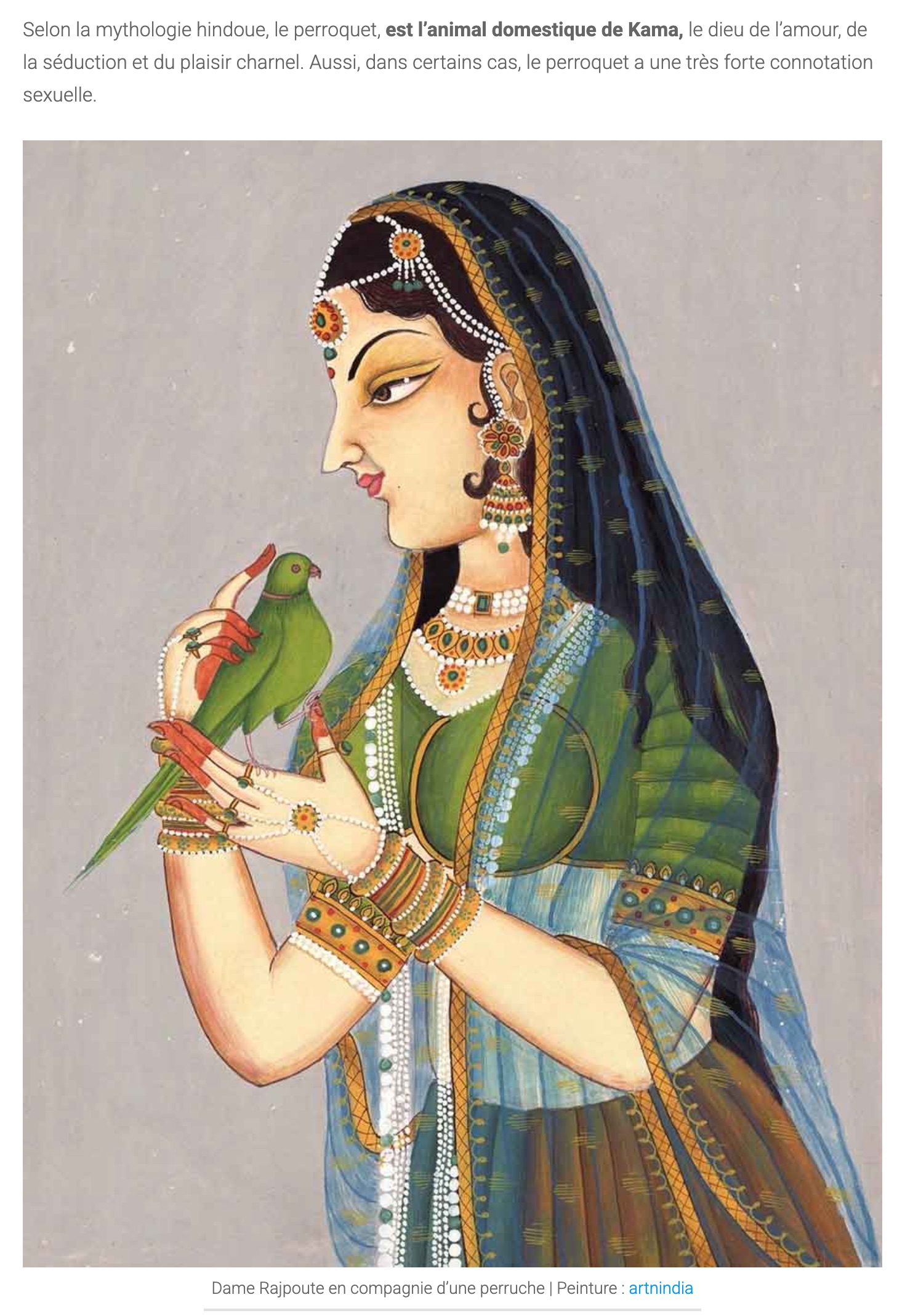
Le symbolisme du perooquet dans
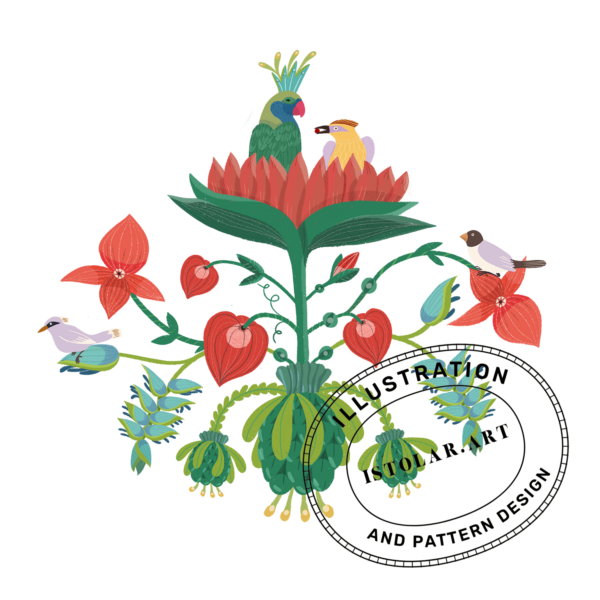
FR: Parfois, nous produisons des images (répétées ou non ) qui nous interrogent.
À partir d’une simple fantaisie, nous en arrivons à préssentir des formes invariants culturels, des images que l’on suppose suffisamment archétypales pour avoir pu exister ailleurs, au sein de cosmologies complètes.
Quand on vous dit qu’un pattern possède des capacités narratives!
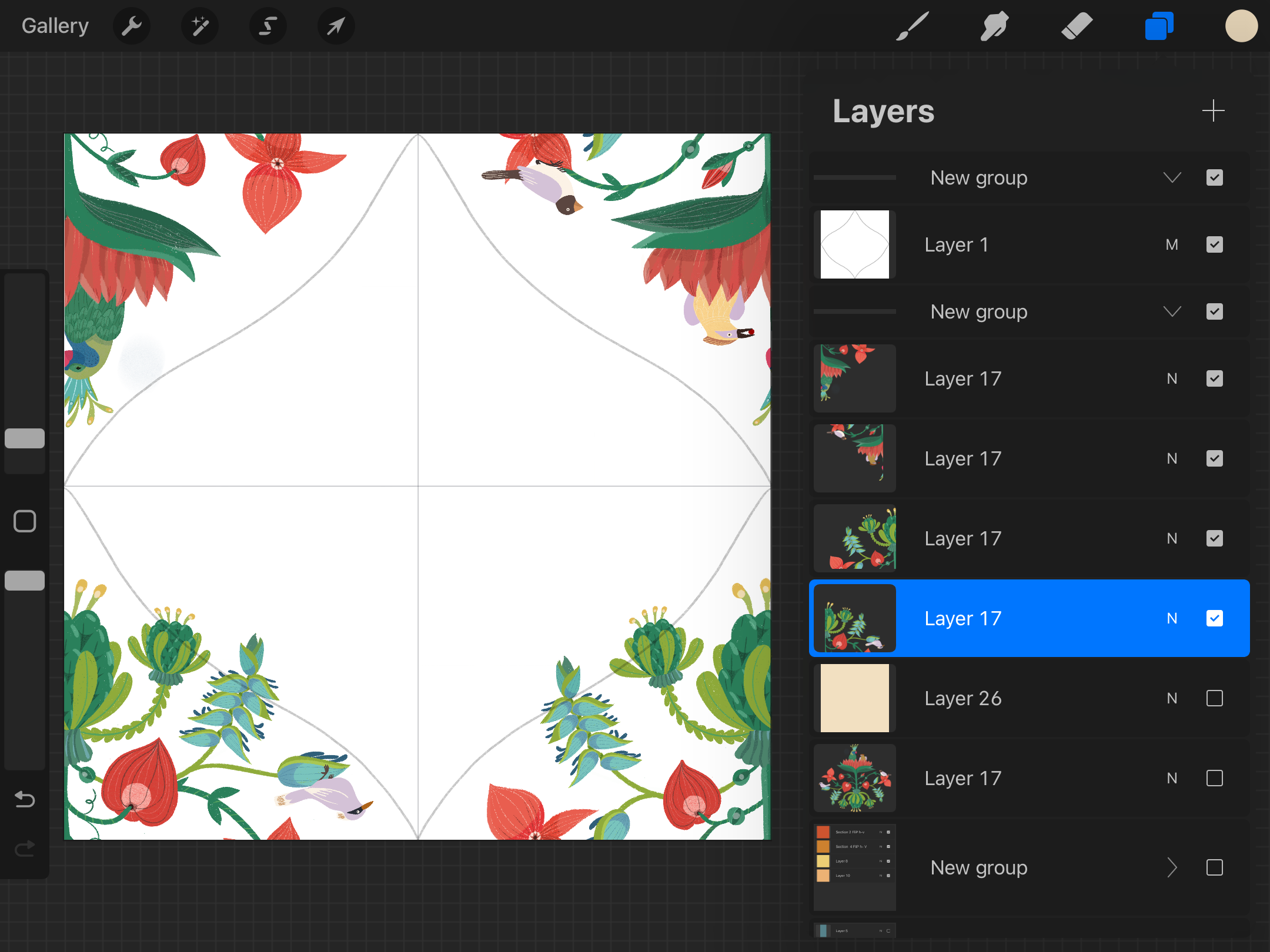
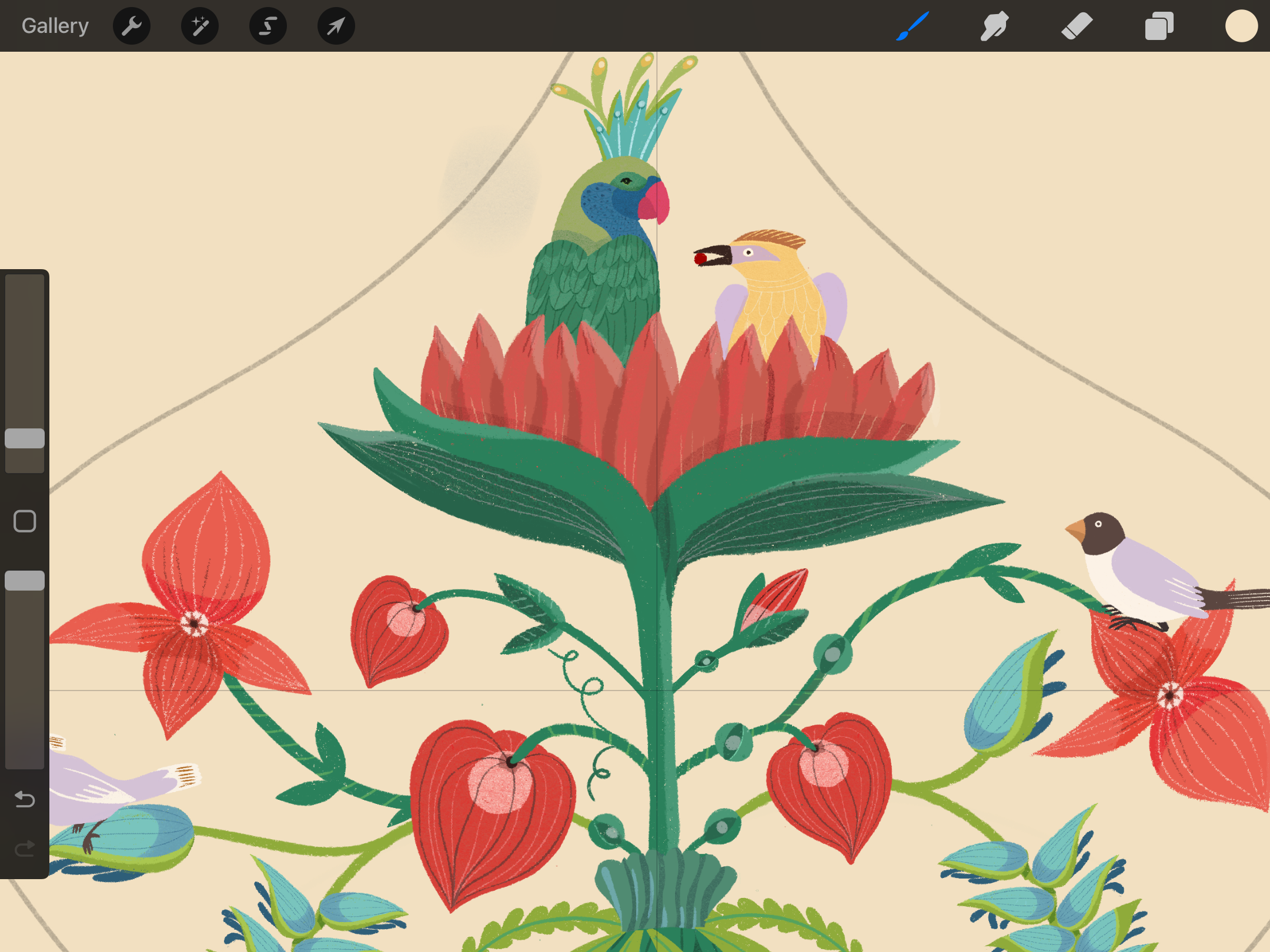
Il peut jouer avec nos imaginaires, bien au-delà de sa fonction ornementale. Les motifs principaux et secondaires s’articulent, se répondent et finissent par produire du sens. La dimension narrative du motif répétitif réside précisément dans cette ouverture interprétative : en l’absence de récit explicite, il nous invite à construire nos propres associations, à convoquer des images réelles ou mentales, des souvenirs, des réminiscences, des fragments de récits.Le motif devient alors ce que l’on pourrait appeler un “ un espace de fiction latente”
Ma cuririosité anectotique sur le symbole du peroquet m’a conduit au magnifique BLOG temoignage de Mathini où elle explore l’heritage culturel de l Inde … je vais m’y plonger comme dans un peportsage ethnographiques. Les photos du site sont magnifiques
ENG: Sometimes, we create images, whether repeating patterns or standalone composition, that end up making us question things. What begins as a simple flight of fancy can lead us to sense and explore certain forms, cultural constants, those images we imagine to be sufficiently archetypal to have existed elsewhere, within entirely different more complex cosmologies.
When we say that a pattern has narrative potential!
It can play with our imagination, reaching far beyond its ornamental function. Primary and secondary motifs echo one another and gradually begin to generate meaning. The narrative dimension of a repeating pattern lies precisely in this openness to interpretation: in the absence of an explicit storyline, it invites us to form our own associations, to summon real or imagined images, memories, recollections, fragments of stories.The motif then becomes what one might call a “space of latent fiction”.
My anecdotal curiosity about the symbolism of the parrot led me to the wonderful blog and personal account of Mathini, where she explores and shares India’s cultural heritage. I am looking forward to immersing myself in it, much as I would in an ethnographic travelogue, with the curiosity of someone discovering a largely unfamiliar territory. The photographs on the site are beautiful.